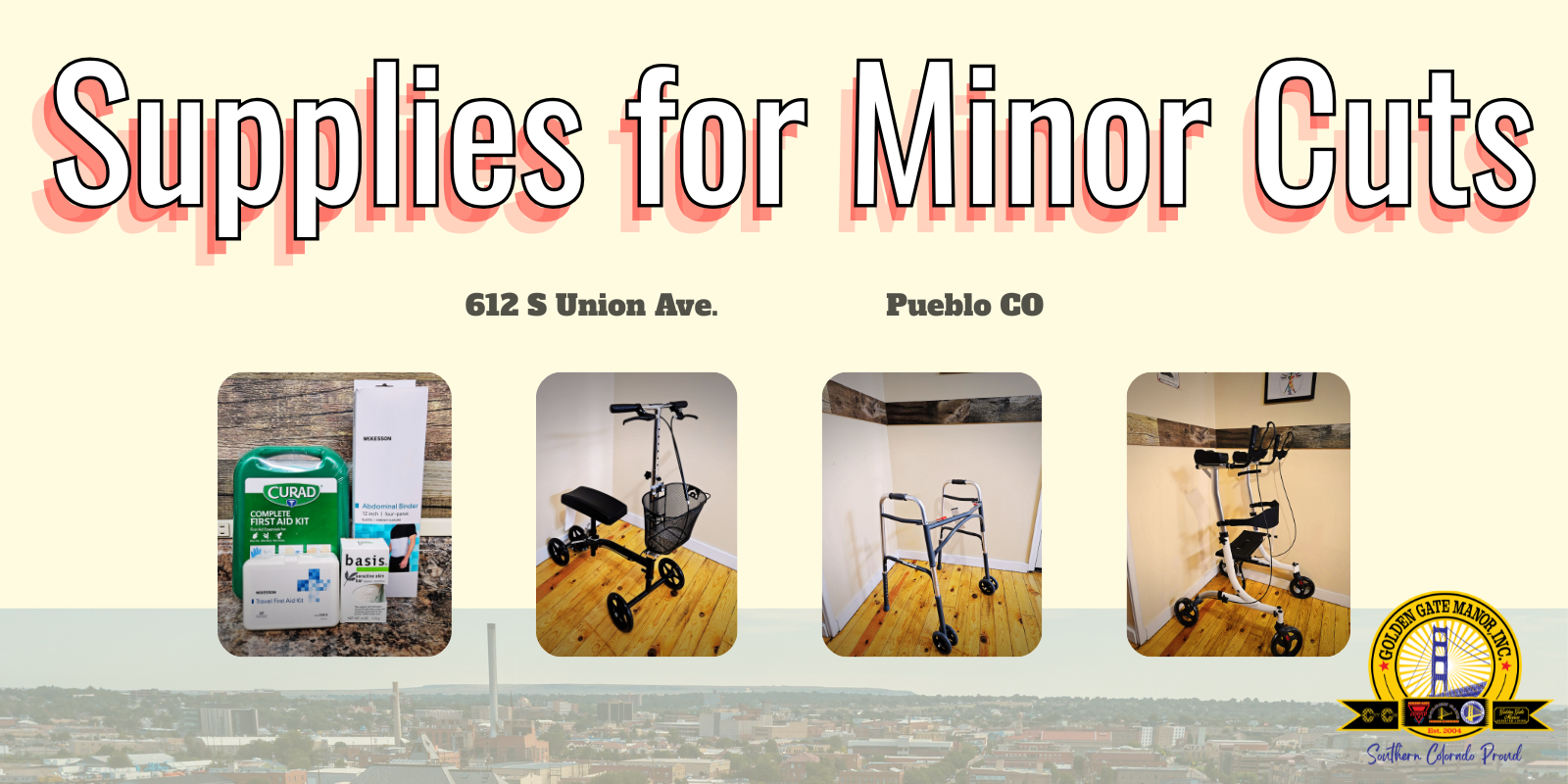
At a Glance
- Start with the “Core 90%” kit: The three essentials your home kit should always cover—protect, clean, cover—so you can handle most everyday injuries without scrambling.
- Tiers that keep it simple: A practical breakdown of Tier 1 (core), Tier 2 (nice-to-have), and Tier 3 (specialty) so you only buy what actually fits your household.
- The most-forgotten items: The small stuff people miss (especially tools + cleaning supplies) that makes a kit truly usable when you need it.
- When to get wound care help: Quick signs a wound may need more than home care, plus how wound care supplies typically work through your provider and a medical supply store (including a brief Medicaid note).
- Colorado-ready add-ons: Quick optional upgrades based on who you’re caring for (kids, caregivers, pets) and a simple winter car kit list for cold-weather delays.
- Keep it “ready,” not dusty: A low-effort system—monthly quick check + twice-yearly reset—so nothing is missing or expired when it matters.
The essentials, in plain language
A good home first aid kit is built around three goals:
- Protect yourself and the person you’re helping (gloves + cleanliness).
- Clean and cover the wound (wound cleaning + dressings that fit).
- Stay prepared over time (restock + replace expired items).
Most people don’t think about their first aid kit until they need it—especially during dry winter months when slips, scrapes, and “normal life injuries” happen. The checklist below is designed for adults, parents, and caregivers who want a kit that’s actually ready when something happens.
Build your kit in tiers (so it fits your life)
Don’t get overwhelmed trying to build the “perfect” first aid kit. The goal isn’t to have a hospital at home—it’s to have the basics handled so you’re not scrambling in the moment.
A simple way to do that is to build in tiers:
- Tier 1 covers most everyday injuries.
- Tier 2 makes care easier when things are messy or uncomfortable.
- Tier 3 is only for households that already know they have special needs (caregiving, fragile skin, frequent abrasions).
Tier 1 — Core kit (the “you should have this” list)
Think of your core kit as three things working together: protect, clean, and cover. If you can do those three reliably, you’ll handle most everyday stuff—cuts, scraped knuckles, a kitchen burn, a kid falling on the sidewalk—without scrambling.
Protect (so you don’t make things worse)
Gloves matter more than people think—especially if you’re helping someone else. They’re the difference between “I’m doing first aid” and “I’m just touching blood and hoping for the best.” Hand sanitizer is a nice backup when you’re not near a sink, and a small trash bag makes cleanup simple.
Clean (because covering a dirty wound is one of the most common mistakes)
Your kit should make cleaning easy: a gentle way to flush (saline) and wipes for the surrounding skin. The goal isn’t scrubbing—just reducing contamination before you cover it.
Cover + secure (so it stays protected while it heals)
A couple bandages is fine until it’s not. You want:
- something quick for tiny stuff (bandages)
- something bigger for anything more than a nick (gauze + non-stick pad)
- something to hold it in place (tape + wrap)
Tools + topicals + info (the “actually usable” pieces)
Tweezers and scissors are the items people forget and regret. Add basic topical support (antibiotic ointment + burn gel/cream), and keep a short guide + emergency contacts card so you’re not making decisions under stress.
A quick reality check (what we see people forget most)
At our store, we see this all the time: people have plenty of bandages, but nothing to clean first, or they’ve got gauze but nothing to secure it. If your kit can protect, clean, and cover—start to finish—you’re ahead of most people.
Tier 1 “grab list” (simple version)
- Gloves + hand sanitizer + small trash bag
- Saline wound wash + antiseptic wipes
- Bandages + gauze pads + non-stick pads
- Roller gauze + medical tape + elastic wrap
- Tweezers + small scissors
- Antibiotic ointment + burn gel/cream
- Mini first aid guide + emergency contacts card
Simple “don’t underbuy” quantities
- Bandages: ~30–50 assorted
- Gauze pads: ~10–20 mixed sizes
- Tape: 1–2 rolls
- Gloves: multiple pairs (more if you’re a parent/caregiver)
Tier 2 — Nice-to-have (makes care easier and cleaner)
Tier 2 is the “I’m glad we had it” tier. You don’t need it for most small injuries—but it makes situations calmer when things are messy, uncomfortable, or inconvenient.
Eye wash / sterile saline (because eyes are different)
If something gets into an eye (dust, cleaning spray, grit), you want the ability to rinse quickly and safely. This is one of the most practical upgrades you can add.
Finger splint + triangular bandage (simple support)
These aren’t “advanced medical.” They’re basic support tools that help an injury stay protected until you can get guidance. A triangular bandage can become a sling or wrap in seconds.
Extra gloves (you’ll use them faster than you think)
This is especially true for parents and caregivers. Gloves disappear quickly when you’re cleaning, re-wrapping, or helping someone more than once.
A couple bigger gauze pads + an extra cold pack
This helps when an injury is bigger than a standard bandage can handle, or when swelling is the main problem (falls, bumps, sprains).
Tier 2 “grab list” (simple version)
- Eye wash solution or sterile saline for flushing
- Finger splint + triangular bandage
- Extra disposable gloves
- A few larger gauze pads + one extra cold pack
Tier 3 — Specialty (only if it fits your household)
Tier 3 is where you stop building a “one-size-fits-most” kit and build a kit that fits your house. Most households don’t need this tier, and that’s okay.
Fragile skin / frequent skin tears
Some people bruise or tear skin easily, and regular adhesives can make things worse. Having gentler dressing options and the right sizes makes a big difference.
Scrape-prone households (kids/teens/outdoors)
Non-stick pads become a staple here. They’re more comfortable and less likely to pull at healing tissue when removed.
Caregiving routines
Barrier wipes are common in caregiving scenarios because they help protect surrounding skin from moisture and friction.
If you want dressings to stay put without fuss
Some people prefer self-adherent wrap because it secures gauze without needing as much tape.
Note: This post is focused on genuine first aid—clean, cover, protect, and monitor. Trauma/advanced tools are not included here by design.
When a wound needs more than a home kit (wound care basics)
Most everyday cuts and scrapes are exactly what a home first aid kit is for. But if a wound needs ongoing care, specialized dressings, or isn’t healing the way you’d expect, that’s where wound care supplies come in.
It’s worth calling a nurse line or getting guidance if:
- it’s not improving after a few days or keeps reopening
- there’s increasing redness, warmth, swelling, drainage, or worsening pain
- it’s larger/deeper than a simple bandage can manage
- you’re changing dressings often and aren’t sure what type is appropriate
Simple process: provider evaluates → supplies may be prescribed → the medical supply store coordinates and shows you how to use them.
Coverage note: Health First Colorado (Medicaid) may cover many wound care-related supplies when medically necessary and ordered appropriately.
Need help with the process? If your provider mentions wound care, we can help translate the order into real supplies and simple next steps. We’re a local medical supply store in Pueblo, right behind the Rawlings Library, and we can help you understand what happens next.
If you’re building your kit in Pueblo or anywhere in Southern Colorado, a few small extras can make it feel more “real life” and less like a generic checklist—especially during dry winter months and busy school/outdoor seasons.
That’s where the next section comes in: quick add-ons based on who you’re caring for (kids, caregivers, and pets).
Quick add-ons by household (optional)
If you want to tailor your kit without overthinking it:
- Kids: extra small bandages, sting relief wipes, extra non-stick pads
- Caregivers: extra gloves, gentler tape/non-stick pads, barrier wipes
- Pets: tick remover tool, gauze + wrap, vet number card
Winter car emergency kit add-on (Colorado reality)
In a Colorado winter, being prepared in your vehicle isn’t just “nice to have.” A minor accident or road delay can turn into hours of waiting in the cold.
In Pueblo, it doesn’t take a blizzard for this to happen. A slick intersection, a slide on an icy morning, a road closure, or a dead battery can turn into a long wait—especially if your phone is dying and your car can’t run nonstop for heat. A few basics can be the difference between uncomfortable and dangerous.
Keep:
- Blanket (or emergency blanket) + warm hat/gloves
- Flashlight (or crank light)
- Water + small snacks
- Phone charger (car + backup)
- Basic first aid mini-kit (bandages, wipes, gloves)
- Reflective safety item (triangle/vest) if you have it
Keep it ready (inventory + restock)
A kit isn’t helpful if it’s half empty when you need it. The easiest system is:
- Keep an inventory list in the kit showing what “fully stocked” looks like
- Do a quick monthly check of high-turnover items (bandages, wipes, gloves, tape, ointments)
- Do a twice-a-year reset for expirations and a full recount
Need specific first aid supplies?
If you’re building a kit from scratch—or you realized you’re missing a few key items—we can help you fill the gaps.
Our website makes it easy to browse common first aid essentials (like dressings, wraps, cleaning supplies, and more) so you can build a kit that fits your household without guessing. And if you’re not sure what type of item you need—especially when it comes to dressing sizes, securing options, or wound care supplies—reach out and we’ll help point you in the right direction.
References
- American Red Cross. “Make a First Aid Kit | Supplies & Contents.”
- Mayo Clinic. “First-aid kits: Stock supplies that can save lives.”
- AAA (Auto Club Group). “What to Keep in Your Winter Car Survival Kit.”
- Colorado Department of Health Care Policy & Financing (HCPF). “DMEPOS Manual.”
- Health First Colorado. “Member Handbook” (coverage overview, includes DME)