At a Glance
- Waiting depends on the trip: A driver may remain at the medical facility, leave temporarily, or another driver may complete the return trip.
- Request a round trip: Transportation to an appointment does not automatically mean transportation home has also been scheduled.
- Estimate the appointment length: The expected ending time helps dispatch plan the return portion of the ride.
- Communicate changes: Call transportation when an appointment is running late, finishes early, or changes unexpectedly.
- Recurring care may be scheduled differently: Dialysis, chemotherapy, and similar repeating appointments may be placed on a standing schedule.
- Explain accessibility needs: Wheelchair transportation, caregivers, service animals, and other accommodations should be included when the trip is requested.
- Confirm the full plan: Do not assume a return ride has been arranged unless the transportation company confirms it.
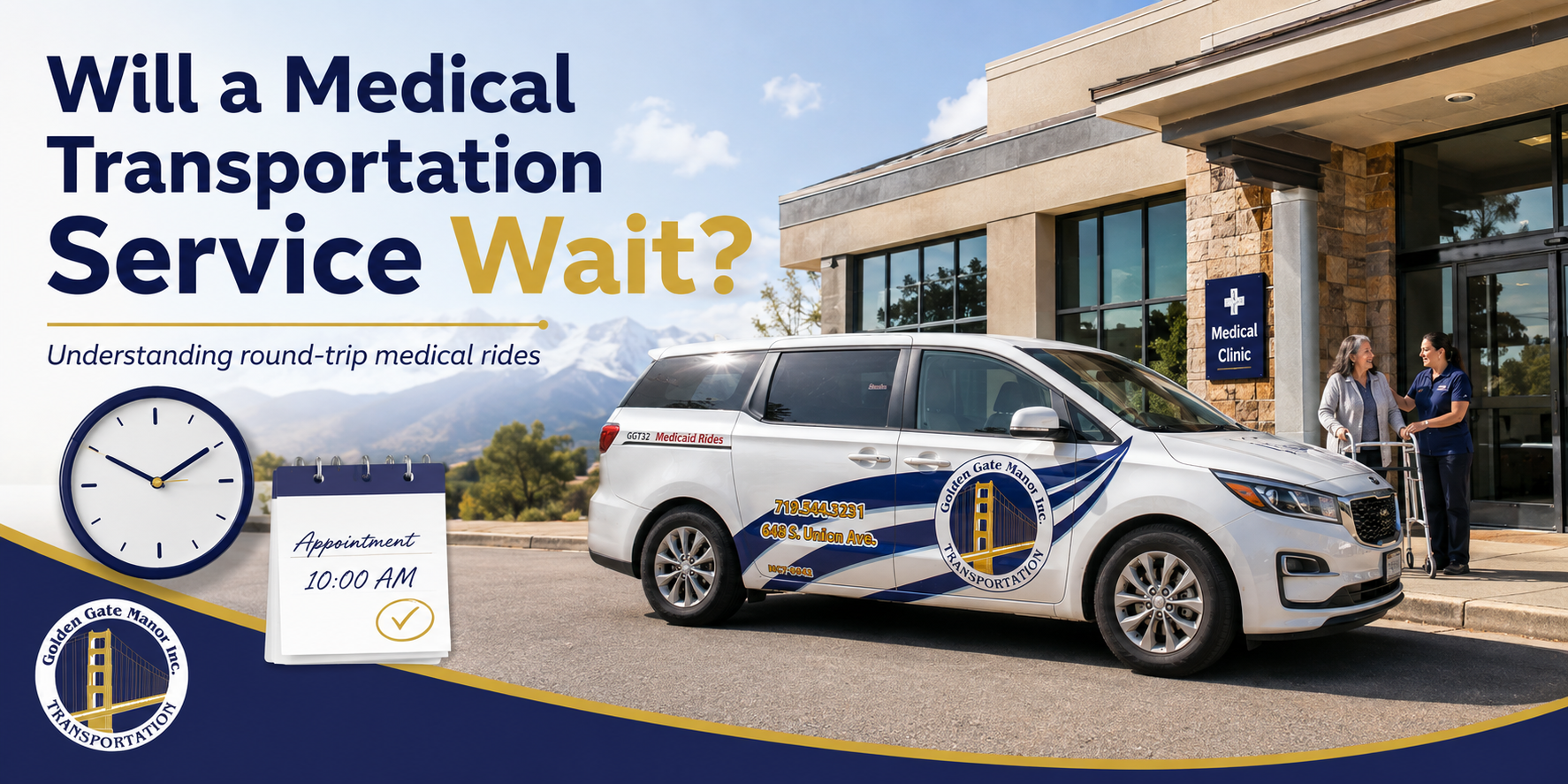
The direct answer is yes, a medical transportation driver may wait for your appointment to end, but waiting is not always guaranteed. The decision can depend on the distance of the trip, expected appointment length, available drivers, nearby transportation requests, and the provider’s current schedule.
At Golden Gate Manor Transportation, the driver often waits for the passenger to finish. However, every trip is different. A driver may remain at the facility, leave temporarily to complete another nearby trip, or a different driver and vehicle may be assigned for the return ride.
This is why requesting a round trip and providing an accurate estimate of the appointment length are so important. Medical transportation operates within a live schedule, and clear communication gives dispatch the best opportunity to coordinate both parts of the trip successfully.
Will a Medical Transportation Service Wait During an Appointment?
A medical transportation service may wait, but the word “wait” can describe several different arrangements. One driver may remain parked nearby, the driver may leave and return later, or another available driver may complete the return portion.
For a local appointment expected to take a short amount of time, it may make sense for the driver to remain nearby. For a longer appointment or a trip where other passengers need local transportation, dispatch may use that time differently.
Long-distance trips may also be handled differently from local rides. If a driver transports someone from a rural Southern Colorado community to an appointment several hours away, remaining in the destination area may be more practical than returning without the passenger. The final arrangement depends on the distance, schedule, available vehicles, and operational needs that day.
Other transportation providers may use different policies. Passengers should ask their current company directly whether the driver is expected to wait, return later, or transfer the return trip to another driver.
What Does a Round-Trip Medical Ride Mean?
A round-trip medical ride includes transportation to the medical appointment and transportation away from the appointment when it is finished. It does not necessarily mean that the same driver or vehicle will remain at the facility for the entire appointment.
The outbound and return portions are two parts of the same transportation request. Dispatch may coordinate them using:
- The same driver and vehicle
- The same driver after a temporary departure
- A different driver from the same transportation company
- A different accessible vehicle when required
- A return pickup scheduled around the expected appointment ending time
Health First Colorado describes NEMT as transportation for members who do not have another way to get to or from covered medical appointments. Members should still make sure both directions are included when requesting the trip through their transportation provider.
Requesting transportation to an appointment does not always create a return ride automatically. Ask for a round trip and receive verbal confirmation that both portions have been scheduled.
Why the Expected Appointment Length Matters
Dispatch needs an estimated appointment ending time to plan the return ride. A routine primary care appointment may require a different amount of time than chemotherapy, dialysis, physical therapy, imaging, outpatient surgery, or a specialist consultation.
When scheduling, tell the transportation representative:
- The appointment start time
- The facility’s estimated appointment length
- Whether check-in is required before the listed time
- Whether testing or laboratory work will follow the appointment
- Whether recovery or observation time may be needed
- Whether the facility has provided an estimated discharge time
- Whether the ending time is uncertain
The estimate does not have to be perfect. Its purpose is to give dispatch enough information to build a realistic transportation schedule and reduce the likelihood of an unnecessary wait.
At Golden Gate Manor Transportation, trips are managed in a live dispatch environment. The schedule changes throughout the day as passengers finish appointments, trips take longer than expected, new transportation needs arise, and drivers become available in different areas.
Will the Same Driver Bring Me Home?
The same driver may complete both portions of the round trip, but that cannot always be guaranteed. Driver assignments can change depending on appointment timing, trip distance, vehicle requirements, and other passengers already on the schedule.
A different driver completing the return trip does not mean the original trip was scheduled incorrectly. It may be the most efficient way to provide transportation while responding to the current needs of everyone on the dispatch board.
Passengers should focus on confirming that the return leg exists rather than assuming that a particular driver will remain assigned. A request for the same driver can be communicated, but availability may prevent the transportation provider from fulfilling it.
What Should I Do if My Appointment Runs Late?
Contact the transportation company as soon as you know the appointment is taking longer than expected. Dispatch cannot see what is happening inside the medical office and cannot automatically know that the provider is delayed, additional testing was ordered, or recovery is taking longer.
Golden Gate Manor passengers can call (719) 455-6383 with return-trip updates. The passenger, caregiver, or medical office staff member may communicate the change, depending on who can provide the most accurate information.
The most important point is that the passenger remains informed. When a caregiver or facility employee calls on the passenger’s behalf, they should also tell the passenger what was communicated and what return arrangement was confirmed.
Waiting until after the expected pickup time can create unnecessary confusion. Early communication gives dispatch more time to adjust the schedule and coordinate an appropriate vehicle.
What if the Appointment Ends Early?
Passengers may call and request an earlier return pickup when an appointment finishes sooner than expected. Dispatch will review the live schedule and determine whether a driver can arrive earlier.
An earlier pickup is a request rather than a guarantee. The originally assigned driver may still be completing another trip, traveling from another area, or scheduled to return closer to the original time.
Calling promptly is still worthwhile. An available driver may already be nearby, and dispatch may be able to adjust the schedule without affecting another passenger’s trip.
How Recurring Medical Transportation Is Scheduled
Dialysis, chemotherapy, and similar repeating treatments are often easier to coordinate through a fixed or recurring transportation schedule. These appointments commonly occur on the same days, begin at similar times, and require approximately the same treatment period.
A recurring schedule may include both the outbound pickup and the expected return time. This reduces the need to recreate every trip individually and helps dispatch plan vehicle and driver availability in advance.
Recurring transportation should still be reviewed whenever:
- The treatment schedule changes
- The appointment moves to another facility
- The treatment length becomes longer or shorter
- The passenger begins using a wheelchair or different mobility device
- A caregiver or medical escort will begin traveling
- The passenger will miss a regularly scheduled appointment
- The recurring series has ended
Passengers should not assume that a standing order updates itself when the medical office changes an appointment. Communicate schedule changes directly to the transportation company.
What About Appointments Without a Predictable Ending Time?
Hospital discharges, outpatient surgery, procedures requiring recovery, observation visits, and other appointments may not have a dependable release time. These trips require more communication than a routine appointment with a predictable duration.
Tell dispatch about the uncertainty when scheduling the initial ride. The transportation representative can explain the preferred process for that particular trip and advise who should call when the passenger is ready.
Depending on the circumstances, the return may be coordinated using an estimated time, updated throughout the day, or handled after the facility confirms that the passenger has been released. The correct process depends on the transportation company, payer requirements, trip distance, and available schedule.
Do not provide an unrealistically short appointment estimate simply to obtain an earlier pickup. Accurate information gives the transportation company a better chance of coordinating the trip properly.
Who Should Call When the Passenger Is Ready?
The passenger should normally understand the return plan and know whether another call is expected. However, a caregiver or medical office employee may call when they can communicate the release time more accurately.
The best person to call is the person who knows:
- That the appointment is actually complete
- Whether the passenger is medically cleared to leave
- Where the passenger will be waiting
- Whether mobility or assistance needs have changed
- Whether the facility added another appointment or test
- Whether the passenger’s phone is available
Passengers should not assume the medical office contacted transportation unless someone specifically confirms that the call was made. Verbal confirmation helps prevent misunderstandings between the passenger, facility, transportation company, and caregiver.
Does the Driver Go Inside the Medical Appointment?
Golden Gate Manor Transportation drivers do not accompany passengers through appointments, check them in, provide personal care, act as medical attendants, or participate in discussions with healthcare providers. Their role is transportation rather than caregiving or medical support.
A passenger who needs help inside the facility should discuss bringing a caregiver, medical escort, parent, or other approved support person. Health First Colorado states that a parent, caregiver, or support person may be able to ride when medically necessary, although applicable approval and scheduling rules still apply.
Tell the transportation company about the additional passenger when scheduling. This helps ensure the assigned vehicle has enough seating and can safely accommodate everyone traveling.
Transportation companies may have different policies regarding assistance at pickup and drop-off. Passengers should ask what the driver can and cannot provide before relying on a particular level of support.
Wheelchair-Accessible Round Trips
Passengers who use a wheelchair should confirm that an accessible vehicle is needed for both portions of the round trip. The return driver may be different from the outbound driver, so the accessibility requirement must remain attached to the entire transportation request.
Golden Gate Manor Transportation has a limited number of wheelchair-accessible vehicles compared with standard vehicles. Clear information helps dispatch reserve the correct vehicle and prevents avoidable delays after the appointment.
When scheduling, provide details about:
- Whether the passenger will remain in the wheelchair
- Whether the chair is manual or powered
- The approximate size of the mobility device
- Any additional medical equipment traveling with the passenger
- Whether a caregiver or escort is riding
- Whether the pickup or destination has stairs or access concerns
- Whether additional seating is required
- Whether the passenger’s mobility needs have recently changed
Passengers can review how to request wheelchair-accessible transportation before scheduling.
Companions, Caregivers, Children and Service Animals
Tell the transportation company about every person and service animal expected to travel. This allows dispatch to select a vehicle with appropriate seating, space, accessibility, and securement capabilities.
Relevant information may include:
- A caregiver or approved medical escort
- A parent traveling with a child
- A child traveling with the passenger
- A service animal
- A portable oxygen device
- A walker, wheelchair, or other mobility aid
- Personal items that require additional space
Do not wait until the vehicle arrives to disclose an additional traveler or accommodation when the information is already known. The assigned vehicle may not have sufficient space, which can delay the trip for the passenger and everyone else on the schedule.
What if I Accidentally Scheduled Only a One-Way Ride?
Contact the transportation company as soon as possible and request a return trip. Golden Gate Manor Transportation will make every reasonable effort to help, but adding an unscheduled same-day return may result in a longer wait.
Dispatch may need to locate an available driver, adjust another assignment, or wait until a suitable vehicle becomes free. This can be especially challenging when the passenger needs a wheelchair-accessible vehicle or is far from the provider’s normal service area.
Transportation representatives will generally try to identify whether a return trip is needed during scheduling. Passengers and caregivers should still advocate for themselves by confirming the complete itinerary before ending the call.
A useful confirmation is:
“Can you confirm that I have transportation to the appointment and a return ride home afterward?”
This simple question can prevent uncertainty at the end of the appointment.
Questions to Ask When Scheduling a Round Trip
A brief conversation before the trip can clarify what the passenger should expect. The following questions are especially helpful when the appointment may have an uncertain ending time.
- Is my ride scheduled as a round trip?
- What return time is currently listed?
- Is the driver expected to wait or return later?
- Could another driver complete the return trip?
- Should I call when the appointment ends?
- What number should I call with changes?
- What should I do if the appointment runs late?
- Can I request an earlier pickup if I finish early?
- Is an accessible vehicle listed for both directions?
- Is my caregiver, escort, child, or service animal included?
- What assistance can the driver provide?
- Is there anything the medical facility must confirm?
- How should an unpredictable discharge time be handled?
- Has the return portion been verbally confirmed?
Other medical transportation providers may answer these questions differently. Ask the company completing the trip rather than relying on a policy from another provider.
A Call Script for Scheduling the Trip
Passengers and caregivers can use the following script to communicate the most important details:
“I need a round trip to a medical appointment on date. My appointment begins at time, and the office expects it to last approximately length of time. I will need transportation home afterward. I use mobility device, if applicable, and caregiver, escort, child, or service animal will travel with me. Can you confirm the expected return arrangement, whether I should call when I am ready, and what I should do if the appointment runs late or ends early?”
For an appointment without a predictable ending time, add:
“The facility cannot give me an exact release time. How would you like me or the facility to update dispatch when I am ready?”
The goal is not to predict the appointment perfectly. It is to make sure dispatch understands the full trip and knows which details may change.
Communication Is the Key to a Successful Return Ride
Medical transportation schedules must respond to changing appointment times, traffic, trip distances, vehicle requirements, and passenger needs. Dispatch can make better decisions when passengers provide complete information and communicate changes promptly.
Remember these three points:
- Request the trip as a round trip.
- Provide the best available estimate of the appointment length.
- Call when the appointment timing changes or when dispatch has instructed you to provide an update.
At Golden Gate Manor Transportation, a driver may wait during the appointment, leave temporarily, or another driver may complete the return trip. The arrangement depends on the distance and the live schedule, but confirming both portions in advance reduces surprises.
Southern Colorado passengers can submit a request through the Golden Gate Manor Transportation schedule-a-ride form. Online requests are not automatically confirmed, so call (719) 455-6383 afterward to verify that the complete round trip has been scheduled.
More information about covered medical transportation, accessibility, and trip preparation is available on the Golden Gate Manor Non-Emergency Medical Transportation page.