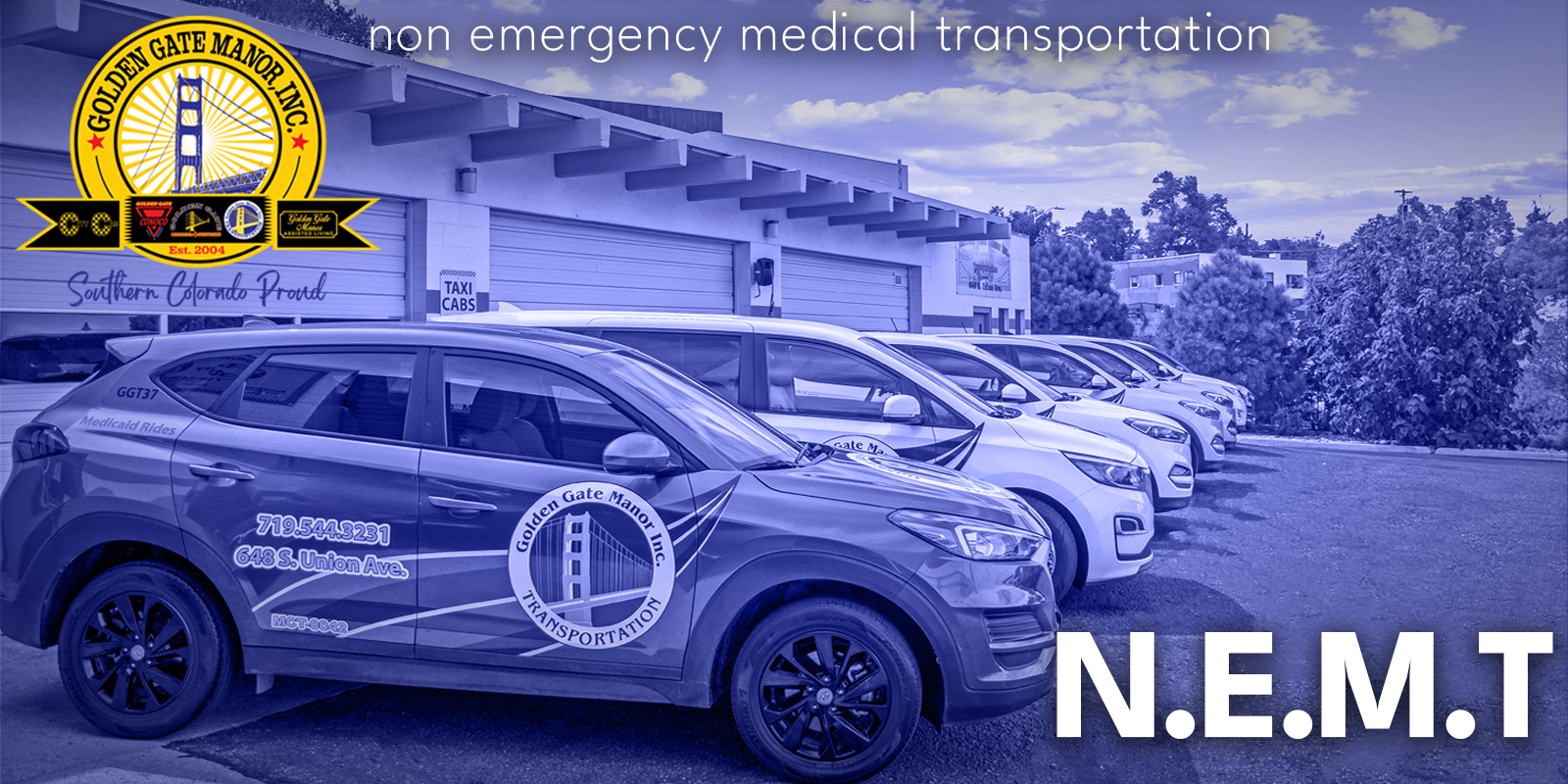
At a Glance
- Quick definition: What NEMT is, what it’s for, and what it’s not (not emergencies, not errands).
- Services & vehicles: The most common NEMT vehicle types in Pueblo and how providers match the ride to the rider.
- Accessibility & support: What riders can request (wheelchair securement, assistance levels, escorts, mobility devices) and why scheduling details matter.
- What NEMT doesn’t do: Transportation-only service—no paramedic-level care, no in-vehicle caregiving, and when you should call 911.
- Medicaid in Colorado: How Health First Colorado NEMT generally works, what’s commonly covered, and what to verify before scheduling.
- Other coverage paths: How private insurance and Medicare handle transportation—and a Medicaid Buy-In option many working adults with disabilities overlook.
- Choosing the right service: Clear signs for ambulance vs NEMT so you’re booking the right type of transport.
- Where to start today: Official links and local resources to figure out what you qualify for, plus a booking checklist to prevent delays and long return waits.
Overview
If you’ve ever missed an appointment because you couldn’t get a ride—or worried about getting to care safely—you’re not alone. In Pueblo and across Southern Colorado, transportation is one of the biggest barriers to staying consistent with healthcare.
This guide breaks down what non-emergency medical transportation is, what most NEMT providers can offer, how coverage usually works (especially Medicaid), and how to tell when an ambulance is the appropriate option. The goal is to help you feel confident when you schedule—because a ride to healthcare shouldn’t be the part that stops you from getting care.
This post is educational and general. Coverage rules can change and may vary by plan, county, and medical need. Always confirm benefits and eligibility with your insurer or Medicaid transportation program.
What is NEMT?
Non-emergency medical transportation (NEMT) is transportation to help a person get to non-emergency medical services—think routine appointments, ongoing treatments, or medically necessary visits that aren’t urgent.
NEMT is different from:
- Emergency transportation (911/ambulance) — for life-threatening symptoms or situations where immediate medical response is needed.
- Personal errands — grocery runs, social visits, trips to handle paperwork, or other non-medical stops that aren’t part of a covered healthcare service.
In other words, NEMT exists for people who need a reliable way to get to care—not for “regular rides,” and not for emergencies.
At the Medicaid level, states are required to make sure beneficiaries can access transportation to and from medically necessary care—meaning the appointment has to be medically necessary and the service itself must be covered under Medicaid. In Colorado, those logistics are coordinated at the state/program level and then routed to approved transportation providers (like Golden Gate Manor Transportation) to complete the trip.
What services are typically offered by NEMT companies?
While services vary by provider and contract type, most NEMT programs and companies are built around a few core capabilities:
1) Common vehicle types (and what they’re actually used for)
When people hear “medical transportation,” they often picture an ambulance. In reality, most non-emergency trips in Pueblo are handled with everyday vehicles that are matched to the rider’s mobility and safety needs—not more medical equipment than necessary.
Here are the most common NEMT vehicle types you’ll see, and what they’re typically used for:
- Sedans / standard passenger vehicles (ambulatory rides)
Best for riders who can walk on their own (or with light support like a cane) and can safely get in and out of a regular vehicle. These trips are commonly used for routine visits like primary care, labs, follow-ups, or pharmacy-related medical stops when allowed by the program. - Wheelchair-accessible vans (rear-entry or side-entry ramps/lifts)
Designed for riders who use a wheelchair and need to remain seated during transport. These vehicles include securement systems to keep the chair stable and safe while driving. They’re commonly used for dialysis, rehab appointments, specialist visits, and any appointment where transferring into a sedan isn’t safe or possible. - Paratransit-style vehicles (step support + extra space)
A good middle ground for riders who don’t require a wheelchair van, but still need more room, easier entry, and a more stable ride—for example, someone using a walker, someone with limited balance, or someone who can’t safely “step up” into a standard vehicle.
And depending on the Medicaid transportation structure in a region, there can be additional options that support the same goal—getting members to covered, medically necessary care—such as:
- Mileage reimbursement (for eligible friends/family/caregivers who drive a member to care)
- Public transit solutions (vouchers or coordinated transit options where appropriate)
- Contracted partner transportation networks (used to fill gaps based on availability and policy)
The goal is simple: match the ride to the rider so transportation is safe, comfortable, and realistic—whether that means a standard car, a wheelchair-accessible van, or a vehicle with extra space and easier entry.
2) Accessibility and support options (what “help” can look like)
One of the biggest misunderstandings about NEMT is that it’s “just a ride.” In reality, good NEMT is built around safety, accessibility, and consistency—because the whole point is helping someone actually make it to the appointment without stress, injury risk, or confusion.
Depending on the rules of the program and the provider’s policies, NEMT support can include:
- Wheelchair securement + safe positioning
For wheelchair rides, the chair isn’t just “rolled in.” It’s secured using an approved system so it stays stable during turns and stops. This is a big part of what makes a wheelchair-accessible trip different from a regular ride. - Assistance level: curb-to-curb vs door-to-door (program-specific)
These terms matter, and they’re often defined by the program:- Curb-to-curb: the driver meets you at the curb and helps you safely enter/exit the vehicle.
- Door-to-door: the driver may assist from the entrance of the pickup location to the vehicle and from the vehicle to the entrance of the destination.
The exact level of assistance can depend on policy, safety rules, staffing, and the environment (weather, building access, stairs, etc.).
- Mobility devices are welcome (walkers, canes, rollators, etc.)
Riders often use more than one device depending on the day. The important part is letting scheduling know what you use so the right vehicle and space are assigned—and so loading/unloading is safe and smooth. - Escort/companion riders (when allowed or required)
Some riders need an escort because of age, cognitive status, mobility limitations, or medical reasons. In many cases, escorts are allowed when medically necessary or when required by policy—but it’s not automatic. The safest approach is to mention this during scheduling so expectations are clear before the trip. - Clear communication and scheduling notes
A lot of accessibility is not physical—it’s logistical. Things like gate codes, facility entrances, “call when arrived,” or “patient needs extra time” notes can make the difference between a calm pickup and a missed ride.
Bottom line: NEMT support is designed to remove barriers—but what’s included depends on the benefit rules and what was requested during scheduling. If you don’t mention a mobility need or support requirement up front, the trip may be delayed or assigned incorrectly.
3) What NEMT usually does not include (and why that matters)
NEMT is transportation, not treatment. The driver’s role is to get you to your medically necessary, covered appointment safely and on time—not to provide hands-on care or medical decision-making during the ride.
Here’s what that means in plain terms:
- Drivers are not caregivers or clinical staff
An NEMT driver is there in a transportation capacity. They can help with basic trip-related logistics (like safe entry/exit within the program’s assistance level), but they are not there to provide personal care, medical supervision, or in-vehicle assistance beyond what’s required for safe transport. - No paramedic-level monitoring or medical intervention
Unlike an ambulance, NEMT vehicles do not provide emergency medical monitoring or treatment. There’s no expectation of clinical assessment, vital checks, or emergency response capability during transport. - If it’s an emergency, call 911
If someone is experiencing urgent or life-threatening symptoms—such as chest pain, signs of stroke, severe breathing difficulty, uncontrolled bleeding, or sudden loss of consciousness—NEMT is not appropriate. In those situations, emergency services are the right choice. - Some drivers may have CPR training, but that doesn’t make it an emergency service
While some drivers may be trained in CPR or basic first aid, it is not the same as an ambulance crew and is not always a requirement depending on the role and program. NEMT should never be relied on as a substitute for emergency medical response.
Think of NEMT as ancillary support: our job is to connect you to the healthcare services you need by removing the transportation barrier—so you can consistently access care.
Does Medicaid pay for NEMT in Pueblo, CO?
In Colorado, Health First Colorado (Colorado Medicaid) includes a Non-Emergent Medical Transportation (NEMT) benefit to help eligible members get to and from medically necessary, Medicaid-covered appointments when they don’t have another reasonable way to travel. In practice, this benefit exists so people can stay consistent with care—because missing appointments due to transportation barriers can quickly turn into bigger health problems.
To keep this accurate, the best source is always the official program guidance and provider resources below:
Official Colorado Medicaid (Health First Colorado) resources:
- Health First Colorado NEMT overview
- Colorado HCPF NEMT page (program context, including how NEMT is arranged)
- Colorado HCPF NEMT provider list
- Federal Medicaid transportation guidance (CMS)
What Medicaid NEMT commonly covers (general examples)
NEMT is typically intended for:
- Covered medical appointments and services (non-emergency)
- When the member has no other reasonable means to get there
Health First Colorado’s NEMT page also describes additional covered transportation arrangements that may apply in certain situations, like mileage reimbursement or other travel modes (details depend on need and authorization).
What to verify before you assume coverage
Because “coverage” isn’t always one-size-fits-all, confirm:
- Whether the appointment/service is Medicaid-covered
- Whether prior authorization is required
- Whether you must schedule through a broker or approved provider
- Rider rules (companions, minors, caregiver policies)
- Time windows (pickup timing, return timing, “will-call” procedures)
Will private insurance or Medicare pay for NEMT?
Private insurance
Some private insurance plans do include a transportation benefit for medical appointments, usually through a contracted transportation vendor or an “extra benefit” tied to the plan. Other plans do not include transportation at all.
The fastest way to get a clear answer is to check your specific plan benefits (or call the member services number on your insurance card) and ask:
- “Do I have a non-emergency medical transportation benefit for covered appointments?”
- “Are there limits on trip count, distance, or approved appointment types?”
- “Do I need to schedule through a specific transportation vendor or get prior authorization?”
Medicare
Traditional Medicare generally focuses on ambulance coverage when medically necessary—not routine “ride assistance” to appointments.
Medicare’s own coverage guidance explains that ambulance services may be covered when transportation by any other vehicle could endanger your health, including some non-emergency ambulance situations if medically necessary and appropriately ordered.
If you’re looking for a ride to an appointment (and you do not need an ambulance level of care), that’s usually where Medicaid NEMT or plan-specific transportation perks come into play—not standard Medicare ambulance coverage.
If Medicaid transportation is what you need but you assume you don’t qualify, there’s another route worth knowing about. Colorado’s Medicaid Buy-In Program can help some working adults with disabilities qualify for Medicaid by paying a monthly premium based on income—and a lot of people who assume they’re over the limit actually aren’t.
Ambulance vs NEMT: how to tell which one you need
A simple way to think about it:
You may need an ambulance if…
- It’s an emergency (call 911)
- Your medical condition requires medical monitoring during transport
- You cannot safely be transported in a standard vehicle due to acute medical risk
- A physician determines ambulance transport is medically necessary (including some non-emergency ambulance cases under Medicare rules)
See: Medicare’s guidance on when ambulance transport may be medically necessary
NEMT is usually the right fit if…
- It’s not an emergency
- You need a reliable ride to a covered appointment
- You can ride safely without ambulance-level medical care
- You need accessibility support (like a wheelchair-accessible vehicle)
If you are unsure whether the situation is urgent, do not “wait and see.” Call 911 or contact a clinician right away.
Where can you actually go to figure out what transportation you can use?
If your main thought is “Okay… so what do I qualify for?” — that’s completely normal. The fastest way to get a real answer is to work from the most official source based on your coverage type, then branch into local community options if needed.
Here’s a simple “start here” map:
1) If you have Colorado Medicaid (Health First Colorado)
Start with the official NEMT guidance and the provider list:
- Health First Colorado NEMT overview
- Colorado HCPF NEMT program page
- Colorado HCPF NEMT provider list (by county)
These pages help you identify whether you schedule through the state’s transportation broker in certain counties or through a local provider list in others.
2) If you have Medicare Advantage (not Original Medicare)
Many Medicare Advantage plans include a transportation perk, but the rules vary by plan. The best move is to check your plan’s “extra benefits” or call Member Services and ask for the transportation vendor.
- Example of how a plan explains scheduling rides (shows how these benefits are typically administered)
- Another plan resource explaining how members check and use transportation benefits (UHC)
3) If you’re a senior or have a disability and need local help (even outside Medicaid)
Pueblo and Southern Colorado also have local/community transportation resources that can help people find options (medical rides, senior transportation programs, and referrals):
- Senior Resource Development Agency (SRDA) transportation services (Pueblo)
- 2-1-1 Colorado transportation resource listings
- AgeWise Colorado transportation directory (statewide senior resources)
4) If you aren’t sure what you have
Start with your insurance card:
- Call the Member Services number and ask:
“Do I have non-emergency transportation benefits for medical appointments, and how do I schedule them?” - If they tell you transportation isn’t included, ask this follow-up question: “What options do members typically use when they need help getting to covered medical appointments?”
If you’re on Health First Colorado, the official NEMT pages above are the most accurate place to begin.
Appointment types NEMT commonly supports
NEMT is often used for:
- Primary care and specialist visits
- Dialysis
- Physical/occupational/speech therapy
- Behavioral health appointments
- Follow-ups after hospital discharge
- Imaging and lab visits (when scheduled as part of covered care)
- Ongoing treatment programs that require consistent attendance
The key is whether the visit is non-emergency and medically necessary / covered under the relevant plan or program.
How booking typically works in Pueblo
Outside major metro areas, Medicaid NEMT is often offered through local transportation providers and/or coordinated through program partners depending on region and benefit structure. Colorado HCPF notes that arrangements differ by area, with a broker model in certain metro counties and local options outside that area.
Booking checklist (use this to avoid delays)
Have this ready before you call or submit a request:
Member + coverage info
- Full legal name (as it appears on insurance/Medicaid)
- Date of birth
- Member ID (Medicaid ID / insurance ID)
- Best callback phone number
Appointment details
- Provider/clinic name
- Clinic address (double-check suite numbers)
- Appointment date and time
- “Arrive by” time (if different)
Mobility + safety needs
- Do you use a wheelchair, walker, cane, or oxygen?
- Can you transfer independently?
- Do you need a wheelchair-accessible vehicle?
- Will a caregiver/escort be riding with you? (and why)
Trip logistics
- One-way or round-trip?
- Return plan (scheduled return time vs “will-call” after appointment)
- Pickup address (and any gate/entry instructions)
- Special pickup notes (apartment building, facility entrance, etc.)
A quick call script (copy/paste friendly)
“Hi, I need to schedule non-emergency medical transportation in Pueblo for a medical appointment.
My name is ____. My member ID is ____. The appointment is on ____ at ____ at ____.
Pickup address is ____. I need (wheelchair-accessible / ambulatory) transportation.
I will (not) have an escort with me. What else do you need from me to confirm this ride?”
What can cause cancellations or no-shows (and how to prevent them)
Common problems are usually simple—but costly:
- Wrong pickup address or missing suite/entrance info
- The rider isn’t ready during the pickup window
- The appointment time changes but the ride request doesn’t
- Return trip confusion (“will-call” vs scheduled pickup)
- Mobility needs not communicated (wheelchair-accessible vehicle not requested)
Best practice: confirm details the day before whenever possible, be ready early, and verify your return plan (scheduled return vs will-call). That one step can prevent long waits after your appointment.
Next step for Pueblo riders
If you’re trying to get NEMT figured out quickly, focus on these three actions:
- Confirm coverage (Medicaid/insurance) and whether prior approval is required
- Gather your booking checklist details (above)
- Request the correct vehicle (ambulatory vs wheelchair-accessible)
If you’re local and want help scheduling a ride through our team, you can start here:
- Schedule a ride online
- NEMT information page
- How to Prepare for your First Ride
- Non-Emergency Medical Transportation Business Blog Post
References
- Health First Colorado
- Health First Colorado — Non-Emergent Medical Transportation (NEMT)
- Colorado HCPF — NEMT Provider List
- Colorado HCPF — Non-Emergent Medical Transportation
- CMS — A Medicaid Transportation Coverage Guide (SMD #23-006)
- eCFR — 42 CFR § 431.53 Assurance of transportation
- Medicare.gov — Ambulance services coverage
- Medicare.gov — Medicare Coverage of Ambulance Services (PDF)